If you're doing adult work in Munich-whether as an independent escort, webcam model, or private performer-you’re running a business. Not a side hustle. Not a gig. A real business. And that means you need to handle money like one. Germany doesn’t treat adult work as illegal, but it doesn’t give it special protections either. That leaves you in a gray zone where the rules are clear, but the support isn’t. So if you’re trying to figure out how to pay taxes, save money, or avoid getting hit with a surprise bill from the Finanzamt, this is what actually works.
Are You Self-Employed or a Freelancer?
In Germany, if you earn money from adult work and you’re not employed by a company, you’re classified as a Freiberufler-a freelancer. That’s true even if you work from home, use an app to book clients, or only take a few jobs a month. You don’t need to register as a business (Gewerbe) unless you’re renting a space, hiring staff, or selling physical products. Most escorts and models skip the Gewerbe and go straight to the freelancer route.
That means you need to register with your local tax office (Finanzamt). You’ll fill out a form called Fragebogen zur steuerlichen Erfassung. It’s long, but you only need to answer the basics: your name, address, income type, and estimated earnings. Don’t lie about your income. The Finanzamt doesn’t care what you do for work-they care that you report it. They’ve seen it all.
Once you’re registered, you’ll get a tax number. That’s your key to everything else. No tax number? No legal invoices. No bank account for business income. No chance to deduct expenses. You’re just leaving money on the table-and risking fines.
What Can You Deduct?
Germany lets freelancers deduct almost any cost that’s directly tied to earning income. That’s a big deal. If you’re not claiming these, you’re paying way more tax than you need to.
- Transportation: Train tickets, gas, parking, or Uber rides to appointments. Keep receipts or use a mileage log. Even if you drive to a client’s place in the suburbs, it counts.
- Phone and internet: If you use your phone or Wi-Fi for booking, messaging, or video calls, you can deduct a portion. Most people claim 50-70% based on usage.
- Professional clothing and styling: Outfits, makeup, hair appointments, nails-anything you buy specifically for work. You can’t claim your everyday jeans, but a new set of lingerie for client photos? That’s deductible.
- Photography and editing: Hiring a photographer, paying for photo editing software like Lightroom, or buying a new camera for your profile? All deductible.
- Website and platform fees: If you pay for a personal website, or use AdultWork, OnlyFans, or similar platforms, the subscription fees are 100% deductible.
- Health and safety items: Condoms, lube, hand sanitizer, or even a panic button. Yes, really. The Finanzamt accepts these as business expenses.
Keep everything. Use a simple app like Lexware Freiberufler or even Google Sheets. Take a photo of every receipt. Date it. Label it. You don’t need fancy accounting software-you just need consistency.
Tax Rates and Payments
Germany’s income tax is progressive. For most adult workers earning between €20,000 and €50,000 a year, you’ll pay around 20-30% in income tax, plus around 15% in solidarity surcharge and church tax (if you’re registered with a church). But here’s the catch: you don’t pay it all at once.
You’ll get a Vorauszahlung-an advance tax payment-every quarter. The Finanzamt calculates this based on your last year’s income. If you’re new, they’ll estimate based on what you told them. If you earn less than expected, you can ask for a reduction. If you earn more, you’ll pay extra later. It’s not perfect, but it’s manageable.
Most people set aside 30% of every payment they receive. Put it in a separate savings account. Don’t touch it. That’s your tax buffer. When the bill comes, you’re ready.

Bank Accounts and Payments
You cannot mix personal and business money. If you deposit client payments into your personal account, you risk being flagged for tax evasion-even if you’re honest. German banks are strict. Many will freeze your account if they see frequent cash deposits or payments from unknown sources.
Open a Freiberufler-Konto. Some banks like N26, Revolut, or Deutsche Bank offer business accounts for freelancers. You don’t need a Gewerbe to get one. Just bring your tax number and ID. Use this account for all income and expenses. It makes bookkeeping easier and gives you proof you’re serious.
When you invoice clients, use your real name and tax number. Don’t use a stage name on invoices. The Finanzamt needs to match your real identity to your income. You can use your stage name on your website or profile-but not on official documents.
What Happens If You Don’t Report?
Some people think they can stay under the radar. They don’t file. They cash payments. They use PayPal or crypto. It sounds safe. It’s not.
Germany’s tax authorities use automated systems to track bank flows, platform payouts, and even cryptocurrency transactions. If you’re earning €300-€500 per week and never report it, you’re on their radar. They don’t come for you right away-but they will come.
If you’re caught, you’ll owe back taxes, interest, and a fine of up to 10% of the unpaid amount. In extreme cases, they can seize your assets. And if you’re a foreign national, it can affect your residency status.
The good news? Germany has a Selbstanzeige-a voluntary disclosure program. If you haven’t filed in past years, you can come forward, pay what you owe, and avoid penalties. It’s not free, but it’s better than being caught.
How to File Your Taxes
You file your annual tax return (Einkommensteuererklärung) by July 31st each year. If you use a tax advisor, you get an extension until December 31st. Most people don’t need one-unless your situation is complex.
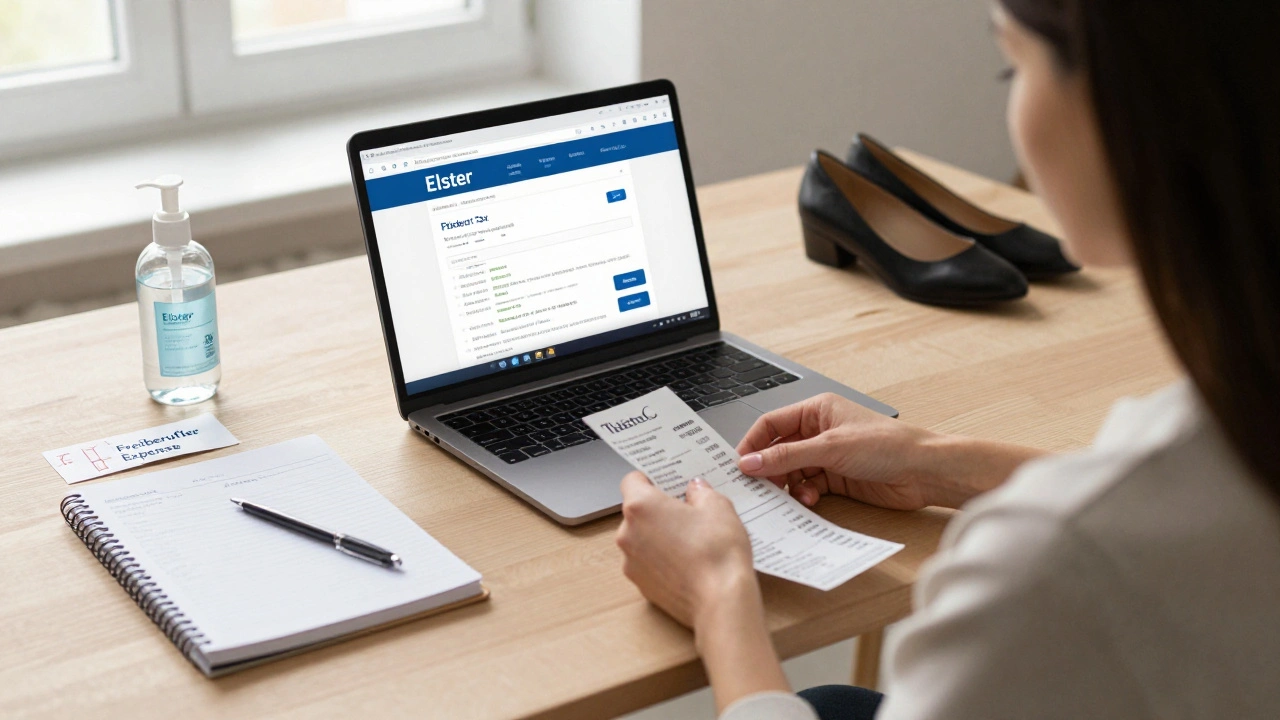
You can file online for free using Elster, the official German tax portal. It’s in German, but you can use Google Translate. Fill in your income, list your deductions, and submit. The system calculates your refund or balance due.
Keep copies of everything for at least 10 years. The Finanzamt can audit you anytime within that window. If you’re asked for receipts, you must provide them. No receipts? No deduction.
What About Health Insurance?
Everyone in Germany must have health insurance. If you’re a freelancer, you choose between public (gesetzlich) or private (privat). Public insurance costs around €240-€300 per month, based on your income. Private insurance can be cheaper if you’re young and healthy-but harder to switch out of later.
If you earn less than €66,600 a year (2025 limit), you can stay in public insurance. That’s the best option for most adult workers. You get full coverage, including dental and mental health. You can deduct your premiums as a business expense.
What You Can’t Do
- Don’t claim rent or utilities as business expenses unless you have a dedicated home office space (at least 10 sqm, used only for work).
- Don’t use cash payments without receipts. If you get paid in cash, write a simple receipt: date, amount, service, your name, and tax number.
- Don’t ignore your tax number. If you forget to include it on invoices, clients can’t deduct their payments-and you’ll look unprofessional.
- Don’t rely on advice from other workers. Everyone’s situation is different. What worked for someone else might not be legal for you.
Final Tip: Think Like a Business Owner
Adult work in Munich isn’t just about meeting clients. It’s about building a sustainable income. That means planning ahead. Saving for taxes. Investing in your image. Protecting your health. Keeping records. Saying no to risky clients. Charging what you’re worth.
The people who thrive aren’t the ones with the most clients. They’re the ones who treat it like a business. They pay their taxes. They save. They plan. They don’t wait for problems to show up.
If you’re serious about working in Munich long-term, this isn’t optional. It’s the foundation. Get it right now, and you’ll avoid stress, fines, and surprises later.
Do I need to register a business to do adult work in Munich?
No, you don’t need to register a business (Gewerbe) unless you’re hiring staff, renting office space, or selling physical products. Most escorts and models register as freelancers (Freiberufler) instead. This is simpler, cheaper, and enough for most people.
Can I use PayPal or crypto to receive payments?
You can, but it’s risky. PayPal and crypto transactions leave digital trails. The Finanzamt can track them. If you’re not reporting the income, you’re exposing yourself to audits. It’s safer to use a dedicated freelance bank account and issue proper invoices.
What if I earn less than €450 a month?
Even if you earn under €450 per month, you still need to report it if it’s regular income. Germany doesn’t have a true ‘mini-job’ exemption for adult work. The Finanzamt looks at frequency and intent-not just the amount. If you’re doing it monthly, it’s a business.
Can I deduct my rent if I work from home?
Only if you have a dedicated home office space of at least 10 square meters used exclusively for work. You can deduct a portion of rent, utilities, and internet based on the space’s size relative to your total home area. Most people don’t qualify unless they have a separate room.
Do I need to pay VAT (Umsatzsteuer)?
No, if your annual income stays under €22,000, you’re exempt from VAT. Most adult workers in Munich fall below this threshold. If you exceed it, you must register for VAT and charge 19% on services. But you’ll also be able to reclaim VAT on your business expenses.
What happens if I’m a foreigner working in Munich?
You still need to report income if you’re living and working in Germany. Your residency status doesn’t exempt you from taxes. If you’re on a tourist visa, you shouldn’t be working at all. If you’re on a residence permit, you must comply with tax rules. Ignoring this can lead to fines or visa issues.