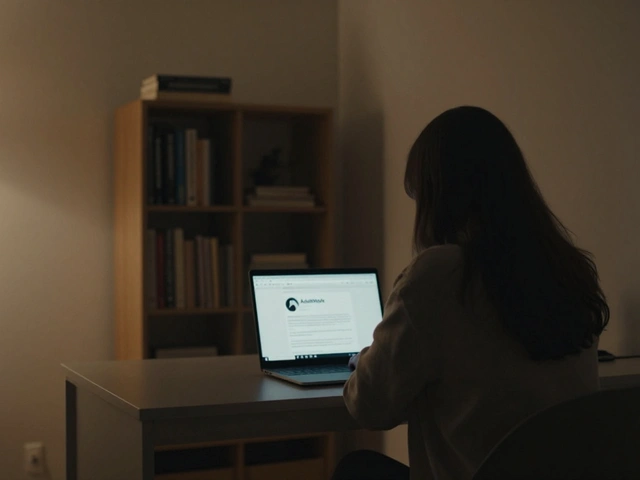
Working as an escort can be a way to earn money on your own terms, but it comes with real risks. If you’re new to this or even if you’ve been doing it for a while, skipping safety steps isn’t an option. This isn’t about fear-it’s about control. The people who stay safe are the ones who treat every job like a high-stakes situation and plan for the worst before it happens.
Know Your Client Before You Meet
Never rely on a profile picture or a flirty message. Scammers, predators, and people looking to trap you often use fake IDs, stolen photos, and scripted lines. Always ask for a video call before agreeing to meet. It doesn’t have to be long-just 60 seconds where they show their face, say their name, and confirm the time and address. If they refuse, walk away. No exception.
Check their profile on AdultWork or any other platform you use. Look at their history: how many reviews? Are they new? Do they have consistent feedback? A client with 15 reviews saying "safe, respectful, on time" is better than one with no reviews and a vague bio like "looking for fun".
Use a screening form. Ask for their full name, age, occupation, and how they found you. Don’t accept "I saw your ad" as an answer. Push for specifics: "Which page? What time did you read it?" Real clients will answer. People with bad intent will stall, get angry, or disappear.
Always Use a Safe Meeting Location
Meet in public first. Even if you’re offering a home visit, insist on a coffee shop or hotel lobby for the initial meet. This isn’t about being difficult-it’s about giving yourself an escape route. If something feels off, you can walk out without looking suspicious. No one questions someone leaving a coffee shop.
If you’re doing a home visit, never go to a client’s place unless you’ve vetted it thoroughly. Use Google Street View to check the building, the entrance, the surrounding area. Is it well-lit? Are there cameras? Is there a busy street nearby? Avoid isolated flats, basement apartments, or places with no visible security. If the address looks like a warehouse, a derelict building, or a house with no number plate-don’t go.
Book hotels through reputable chains. Holiday Inn, Premier Inn, Travelodge-they all have front desks, security cameras, and staff who notice unusual guests. Never pick a small B&B or private rental unless you’ve met the owner in person before. Hotels leave a paper trail. That’s your protection.
Share Your Location and Schedule
Before every job, tell someone you trust where you’re going, who you’re meeting, and what time you expect to be back. Use a trusted friend, not a fellow escort. Why? Because they won’t be emotionally involved. They’ll notice if you don’t check in.
Use a location-sharing app like Find My (iPhone) or Google Maps location sharing. Send them your live location 15 minutes before you arrive. Set a timer for 10 minutes before your expected return. If you don’t update them, they call you. If you don’t answer, they call the police. That’s your safety net.
Keep a backup plan. Write down the client’s name and number on a piece of paper and leave it with your friend. If your phone dies, they still have the info. Never rely on your phone alone.
Carry Emergency Tools
Keep a personal alarm in your pocket. Not a keychain buzzer-something loud, like a SirenGuard or a Karrar. These make 130 decibels. That’s louder than a jet engine. It will draw attention fast. Test it before every job.
Carry a portable charger. Dead phone = no help. Always have at least 50% battery when you leave the house. Keep a spare charger in your bag.
Have a fake emergency call ready. Practice saying, "I’m at the hospital, I need you to come now," in a calm, urgent tone. If a client tries to pressure you into staying longer or doing something you didn’t agree to, make the call. Say it loud enough for them to hear. Most will back off.
Keep a small flashlight or penlight. If you’re in a dark room and feel uneasy, turn it on. It’s a subtle signal that you’re alert and not easily scared.
Set Clear Boundaries-And Stick to Them
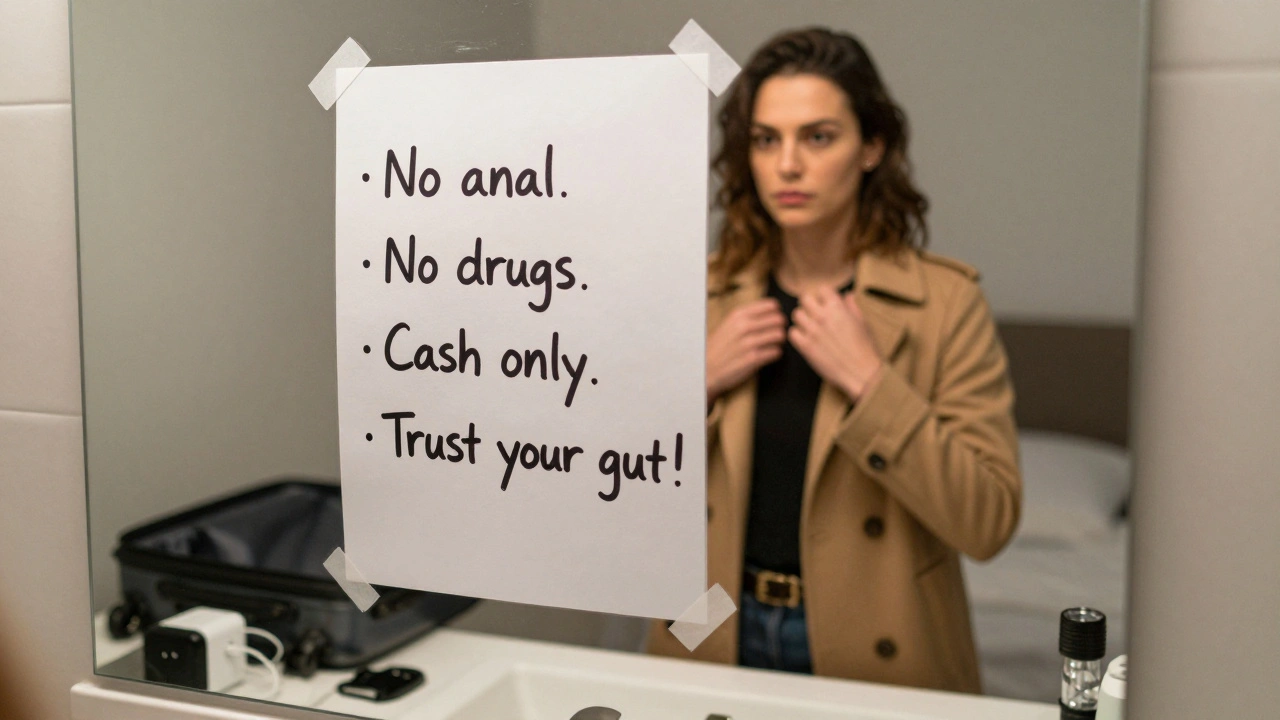
Write down your hard limits. No anal. No group. No drugs. No unprotected sex. No going to remote locations. No meeting after midnight. Write them on a sticky note and put it on your mirror. Say them out loud before every job.
Don’t negotiate on the spot. If a client tries to push for more, say, "That’s not in my service list. I can’t change it." Then end the session. Don’t explain. Don’t apologize. Just get dressed and leave. The longer you talk, the more power you give them.
Use cash only. No bank transfers, no PayPal, no Venmo. If they say, "I’ll pay you later," say no. If they try to pay with a credit card, say, "I don’t accept cards. Cash only." If they argue, leave. Cash leaves no digital trail-and no one can charge back a cash payment.
Trust Your Gut-Every Time
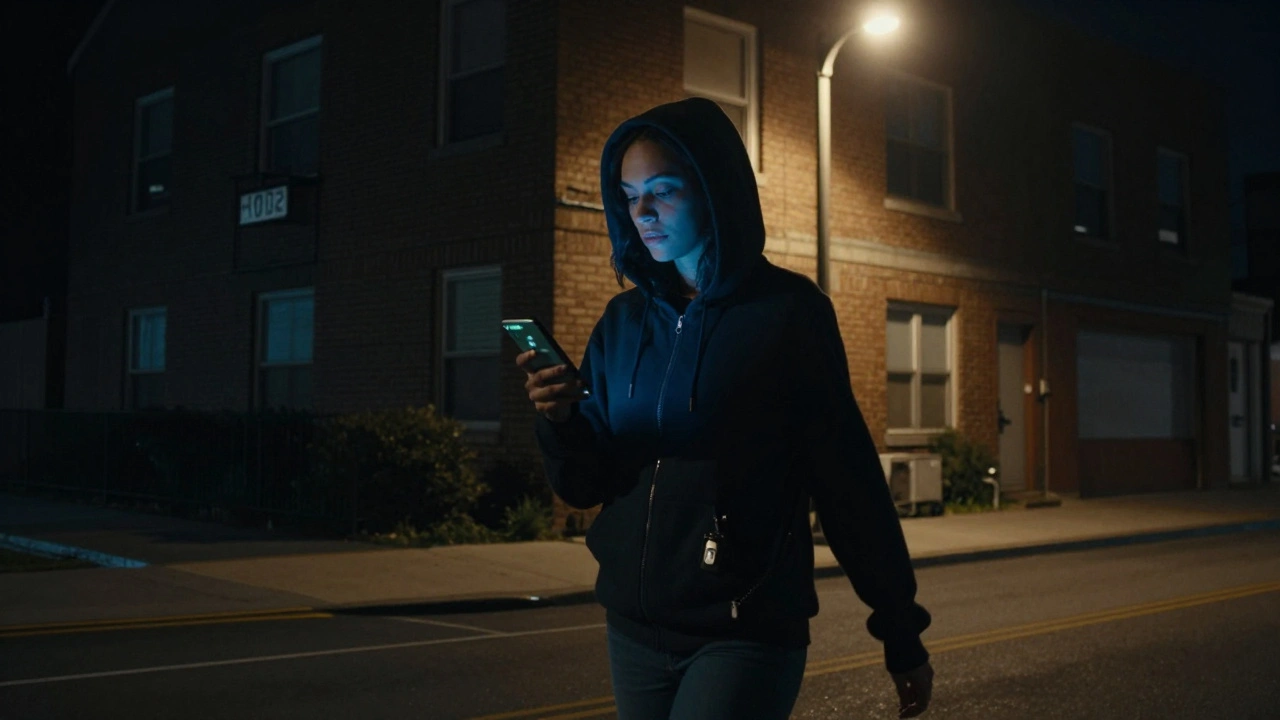
Your body knows before your brain does. That tightness in your chest? The sudden urge to leave? The way their voice drops when they say your name? That’s not anxiety. That’s your survival instinct.
There’s no such thing as "just one time". If something feels wrong, walk out-even if you’ve already had sex. Even if they’ve paid. Even if you’re tired. Your safety is worth more than one payment.
Keep a log. After every job, write down: date, time, location, client name (if given), what happened, how you felt. After a few months, you’ll start seeing patterns. The same names. The same addresses. The same red flags. That’s your intelligence database. Use it to block people before they even text you.
Know Your Legal Rights
In the UK, selling sex isn’t illegal. But soliciting in public, kerb crawling, or running a brothel are. You’re not breaking the law by working alone from your home or a hotel. If the police come, you have the right to remain silent. You don’t have to show ID unless they’re arresting you. Don’t let them pressure you into talking.
If someone threatens to expose you, report it. That’s blackmail. It’s a crime. Save screenshots. Write down names and dates. Call the police. You’re not a criminal-you’re a victim of a crime.
Join a support group. The UK Network of Sex Work Projects (UKNSWP) offers free legal advice, mental health support, and safety training. You don’t have to do this alone.
What to Do If Something Goes Wrong
If you’re in danger, call 999. Say, "I’m a sex worker and I’m in immediate danger." That phrase triggers a specific police protocol. They’ll respond faster.
If you’re assaulted, don’t shower, change clothes, or clean up. Go to a hospital. They’ll do a forensic exam. It’s free. You don’t have to press charges to get help.
Report the incident to the National Ugly Mugs scheme. They track dangerous clients across the UK. One report can stop someone from hurting someone else.
Don’t blame yourself. No matter what happened, it’s not your fault. You did everything right by being prepared. The fault lies with the person who broke the rules.
Safety isn’t a one-time checklist. It’s a habit. The more you do it, the more natural it becomes. The people who last in this work aren’t the ones who take the most risks. They’re the ones who never stop protecting themselves.