Working as an escort comes with unique risks. No matter how experienced you are, if you don’t have a solid emergency plan, you’re playing with fire. It’s not about being paranoid-it’s about being smart. Real people, real situations, and real consequences happen every day. You can’t rely on luck. You need systems. You need backups. You need plans that actually work when things go wrong.
Know Your Client Before They Walk In
The first line of defense isn’t a panic button or a hidden alarm-it’s the screening process. Skip this step, and you’re already behind. Always ask for full name, phone number, and a clear description of what they want. If they refuse to give details, say no. No exceptions. A real client won’t mind. A dangerous one will find a way to pressure you. That’s your red flag.Use a free service like Truecaller or a UK-based caller ID app to check numbers. If the number is new, unlisted, or flagged by others, walk away. You don’t need the money enough to risk your safety. One bad call can end everything. Keep a list of blocked numbers. Update it after every job. If someone tries to contact you again after being turned down, report them to the platform and save the chat logs.
Always Have a Check-In System
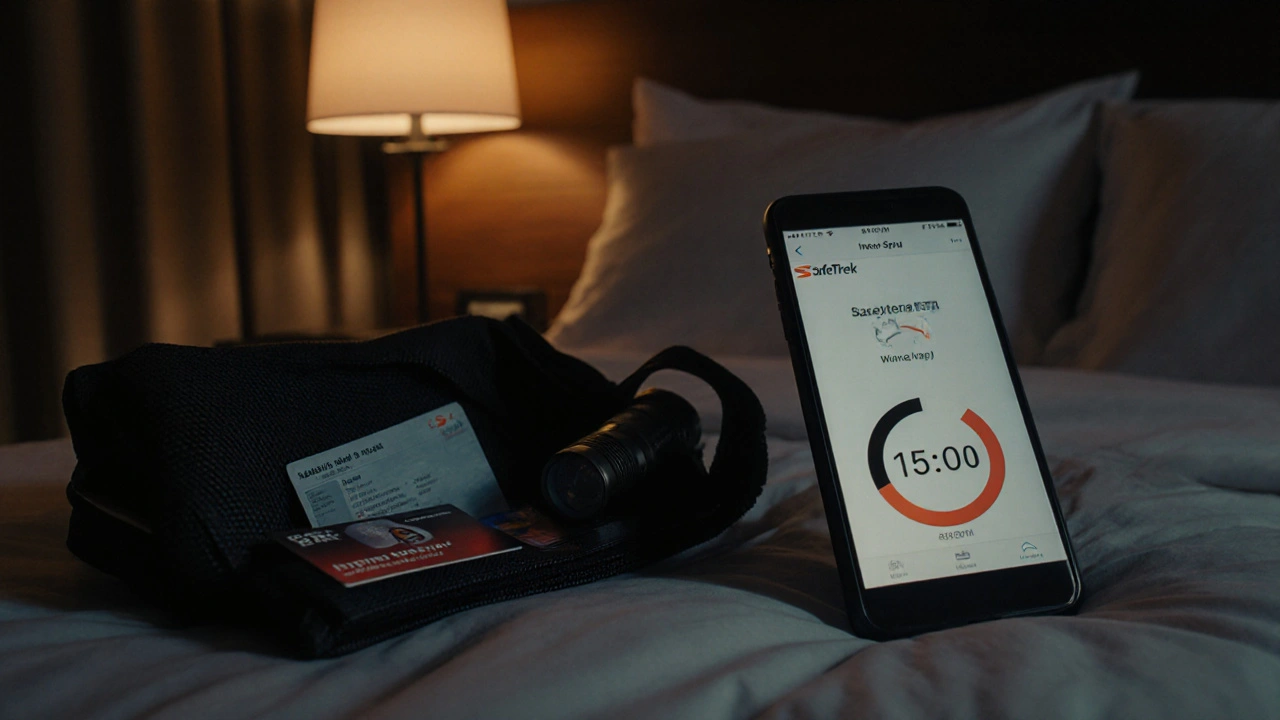
You need someone who knows exactly where you are and when you’ll be back. This isn’t optional. It’s non-negotiable. Pick one trusted person-a friend, a family member, a colleague-and tell them your schedule before every job. Give them the client’s name (or alias), address, expected end time, and your car details if you’re driving.Set a silent alarm. Use your phone’s timer or a dedicated app like SafeTrek or Haven. Set it for 15 minutes before your expected end time. If you don’t cancel it, your contact gets an automated message: “Something’s wrong. Call police.” No questions. No waiting. Just action. This works even if you’re silenced, trapped, or unable to speak.
Some escorts use a code word with their contact. If you say, “I’m running late, the traffic is awful,” and you normally never say that, they know something’s off. Keep it simple. Something only you two would understand. Practice it once so it feels natural.
Carry a Physical Emergency Kit
Your phone can die. Your internet can cut out. Your location can be tracked. That’s why you need a physical kit-something you can grab and run with. Keep it in your bag, always. Here’s what’s inside:- A fully charged power bank (not just your phone charger)
- A small flashlight with a strobe mode
- A personal alarm that sounds at 120 decibels
- A notepad and pen (for writing down license plates or names)
- A copy of your ID and emergency contact card (no address, just phone numbers)
- A small bottle of pepper spray (legal in the UK if under 100ml and labeled for self-defense)
Don’t keep this in your car. Don’t leave it at home. Carry it like your wallet. If you’re walking into a stranger’s place, keep it in your coat pocket. If you’re in a hotel, keep it in your purse under the bed. Make it part of your routine. Like brushing your teeth.
Know Your Escape Routes
Before you even sit down, scan the room. Where’s the exit? Is it blocked? Are there windows? Can you jump? Is the door lockable from the inside? Is there a second way out? These aren’t paranoid thoughts-they’re survival checks.At hotels, always pick a room on the second or third floor. Never take the top floor. Elevators can be dangerous. Stairs are your friend. Know how to get to the lobby without passing through dark hallways. If the client suggests a private house, ask to see the front door. If it’s a basement flat or has no visible exit, say no. You don’t owe anyone a second chance.
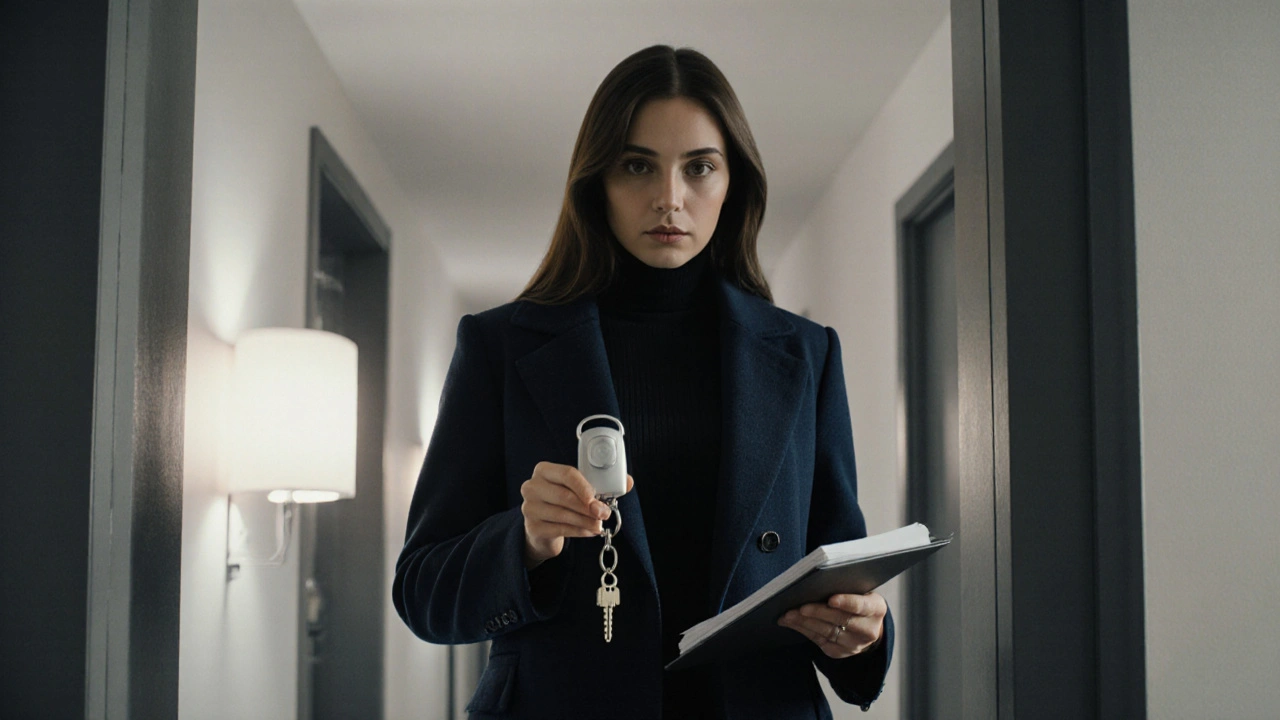
Keep your keys in your hand before you enter. Don’t put them in your bag. Don’t wait until you’re inside. If things go bad, you need to move instantly. Practice this in your head every time you walk into a new place. Even if it’s your 50th job.
Use Technology Wisely
There are apps made for this. Not just for fun. For survival. Ring lets you livestream to a trusted contact. Find My on iPhone or Google Find My Device can share your location in real time. You don’t need to turn it on all day-just before a job. Share your location for two hours. Then turn it off.Use encrypted messaging. Signal is free, open-source, and doesn’t store your messages. Don’t use WhatsApp for sensitive talk. Don’t text your address. Say “I’ll be at the corner of X and Y at 8.” Let them figure it out. Never give your full address in a message.
Record audio if you feel uneasy. Most phones let you start recording with a button press. Don’t wait until it’s too late. If you feel pressure, if the vibe changes, start recording. You might not need it. But if you do, it could save your life.
Have a Legal Backup Plan
You need to know your rights. In the UK, sex work itself isn’t illegal-but soliciting, kerb crawling, and running a brothel are. That means you can legally work alone in your own home or a hotel room. You can refuse service at any time. You can leave without giving a reason. You can call the police without fear of arrest.Save the number for the UK’s National Ugly Mugs scheme (NUM). It’s a free reporting system for sex workers. If someone threatens you, steals from you, or assaults you, report them there. They share info with police and other workers. You’re not alone. Thousands have used this system. You’re part of a network.
Keep a lawyer’s number on speed dial. Not just any lawyer-someone who understands sex work laws. The English Collective of Prostitutes offers free legal advice. Save their number. You won’t need it often. But when you do, you’ll be glad you have it.
Practice Mental Preparedness
Safety isn’t just physical. It’s psychological. You need to train your brain to react fast. Most people freeze when scared. That’s normal. But you can change that.Do a 5-minute mental rehearsal every morning. Picture yourself walking into a job. See the client. Hear their voice. Feel the tension. Then imagine saying “no” and walking out. Imagine grabbing your bag, running to the car, locking the doors. Imagine calling your contact. Imagine the police arriving. Do this daily. It rewires your brain. When it happens for real, your body already knows what to do.
Don’t ignore gut feelings. If something feels off, it is. You don’t need a reason. You don’t need proof. Your instincts are trained by experience. Trust them. Cancel the job. Block the number. Walk away. You’ll lose a payment. But you’ll keep your life.
Review and Update Your Plan Monthly
Your plan isn’t set in stone. It needs to evolve. Every month, ask yourself:- Did I skip a check-in? Why?
- Did I ever feel unsafe but didn’t act? What stopped me?
- Did I learn about a new threat from another worker?
- Is my emergency kit still full? Are the batteries dead?
- Has my contact changed number? Did I update them?
Update your plan. Write it down. Keep it in your phone and in your bag. Make it simple. One page. Bullet points. No fluff. If you can’t read it in 30 seconds, it’s too long.
Share your plan with one other worker. Not everyone. Just one. Swap tips. Compare notes. You’re not competing-you’re protecting each other.
What should I do if a client refuses to leave?
Stay calm. Say clearly, “I’m done. Please leave.” If they don’t, grab your bag, walk to the door, and open it. Don’t argue. Don’t threaten. If they block you, call 999 immediately. Say, “I’m a sex worker and I’m being held against my will.” Police are trained for this. You have rights. You are not in trouble.
Can I use a fake name on AdultWork?
Yes. Always. Use a stage name. Never your real name, address, or birth date. Use a separate email and phone number just for work. Your personal life and your work life should never overlap. This isn’t secrecy-it’s survival.
Is it safe to work from home?
It can be, if you follow strict rules. Never let clients know your real address. Use a PO box for mail. Never post photos of your home. Use a separate entrance if possible. Always screen clients. Never work alone if you’re in a shared space. Have a check-in system. And never let your guard down.
What if I’m robbed?
Your safety comes first. Give them what they want. Money, phone, jewelry-don’t fight. After they leave, call 999. Report the robbery. Then call the National Ugly Mugs scheme. They’ll log the details and warn others. You didn’t fail. You survived. That’s what matters.
How do I know if a client is a scammer?
Scammers often ask for free services, promise big money but pay late, or refuse to meet in person before booking. They may use fake names, untraceable numbers, or pressure you to skip screening. If they push you to break your rules, walk away. Real clients respect boundaries. Scammers test them.
If you’re reading this and thinking, “I already do most of this,” good. But are you doing it consistently? Are you reviewing your plan? Are you sharing it with someone else? That’s the difference between surviving and thriving. This isn’t about fear. It’s about control. You control your boundaries. You control your safety. You control your future.