
If you're doing adult work in Munich, you’re not just offering a service-you’re running a small business. And like any business, you need protection. Without a clear, written agreement, you’re leaving yourself open to misunderstandings, last-minute cancellations, payment disputes, or worse. A contract isn’t about distrust. It’s about clarity. It’s about making sure both you and your client know exactly what’s expected, what’s not allowed, and what happens if things go off track.
Why Contracts Matter in Munich’s Adult Work Scene
Munich has a mix of independent escorts, agency-based workers, and those who operate through platforms like AdultWork. But regardless of how you connect with clients, the risks are the same: someone shows up drunk and demands more than agreed, refuses to pay, or tries to record you without consent. These aren’t rare incidents. They happen often enough that experienced workers in Munich have learned the hard way: no contract, no service.
German law doesn’t specifically regulate adult work, but it does protect personal rights-like bodily autonomy, privacy, and freedom from coercion. A contract that clearly states boundaries, payment terms, and rules around recording or physical contact gives you legal leverage if something goes wrong. Even if you don’t go to court, having a signed document changes how people behave. Most clients will think twice before pushing boundaries if they know there’s a paper trail.
What Every Contract Must Include
Your contract doesn’t need to be a legal document written by a lawyer. But it does need to cover the basics. Here’s what works for workers in Munich:
- Service details: Exactly what is included? Massage? Companion time? Sexual acts? Be specific. Vague terms like "everything" or "full service" invite conflict. List each activity clearly.
- Duration and location: How long will the meeting last? Where? Home? Hotel? Car? Some workers only accept meetings in hotels they’ve booked themselves. Others refuse private residences. State it upfront.
- Payment amount and method: How much? In cash? Bank transfer? Crypto? When? Before, during, or after? Never rely on "we’ll sort it out later." Write the exact amount and payment method. Include late fees if payment is delayed beyond 15 minutes after the session ends.
- No recording clause: Explicitly state that video, audio, or photo recording is prohibited. This is non-negotiable. Many workers in Munich have had footage shared online without consent. A signed contract makes it easier to report violations to police.
- Cancelation policy: What happens if the client cancels within 2 hours? Do you charge a fee? Many workers charge 50% of the agreed fee for last-minute cancellations. Put it in writing.
- Health and safety rules: No unprotected sex. No drugs or alcohol on your premises. No bringing others without permission. These aren’t just preferences-they’re safety boundaries. Make them contract terms.
- Consequences of breach: What happens if the client breaks the rules? Do you walk out? Do you report them? Do you block them from future bookings? State your response clearly.
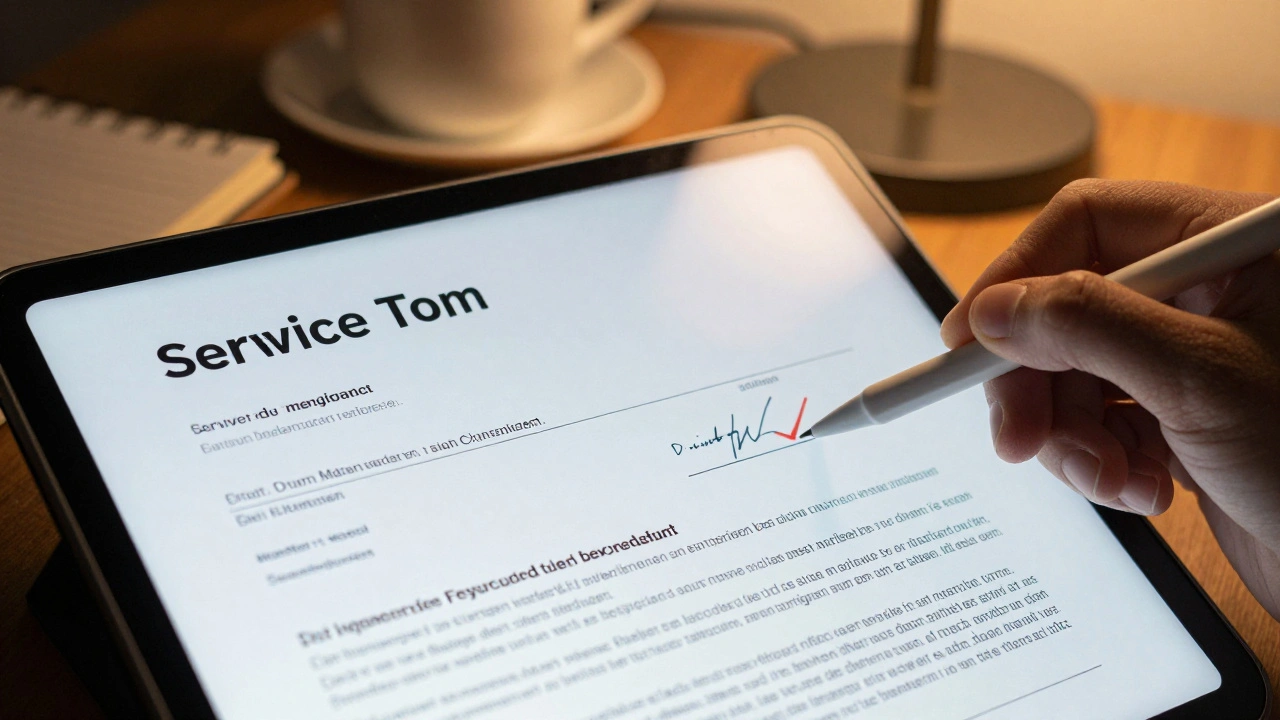
Some workers in Munich use a simple two-page template they’ve tweaked over time. Others use digital tools like DocuSign or Google Forms with signature fields. The format doesn’t matter. What matters is that it’s signed-ideally with a wet signature or verified digital signature-and that you keep a copy.
How to Present the Contract Without Scaring Clients Away
You don’t want to come off as cold or suspicious. The key is framing. Instead of saying, "Here’s my contract, sign it or leave," try this:
"To make sure we both have a smooth, safe experience, I ask all clients to confirm the details we’ve discussed in writing. It’s just a quick form-it protects both of us. You can sign it before you arrive or right here when you get here. No pressure, but I can’t proceed without it."
Most clients understand. In fact, many appreciate it. It signals professionalism. It shows you take yourself seriously. And in a city like Munich, where clients come from all over Europe, a clear contract filters out the unreliable ones before you even meet.
Where to Get a Reliable Template
You don’t need to write one from scratch. Many experienced workers in Munich share templates through private forums and WhatsApp groups. One widely used version was created by a group of independent escorts who met regularly at Café Glockenspiel in Schwabing. It’s been updated for GDPR compliance and includes clauses on data privacy-like not storing client names or contact info longer than 30 days.
If you’re starting out, search for "escort contract template Germany" on trusted adult work forums. Avoid free templates from random blogs-they often miss key legal points. Look for ones that mention German civil code (BGB) and data protection (DSGVO). A good template will include:
- A statement that services are voluntary and consensual
- Confirmation that the client is over 18
- Clause that the agreement is governed by German law
- Right to refuse service at any time
- Privacy clause: no personal data collected beyond what’s needed for the booking
Some workers in Munich now use blockchain-based digital contracts stored on secure platforms like SignNow or Notarize. These create a tamper-proof record with timestamped signatures. They cost a few euros per use but offer extra protection if a dispute escalates.
What to Do If a Client Refuses to Sign
If someone refuses to sign your contract, walk away. Don’t negotiate. Don’t say, "Okay, just this once." One exception leads to another, and then you’re stuck in a pattern where boundaries keep getting pushed.
In Munich, I’ve seen workers take risks with "nice guys" who say, "I don’t believe in contracts," only to end up with a client who showed up drunk, demanded oral sex without warning, and then refused to pay. The police couldn’t help because there was no proof of what was agreed. No contract = no recourse.
There’s always another client. Always. The ones who respect your boundaries are the ones who sign. The ones who don’t? They’re not worth your time, your safety, or your peace of mind.
Keeping Your Contract Secure
Once you have a signed contract, store it safely. Don’t keep it on your phone or in an unencrypted folder. Use password-protected cloud storage like iCloud or Google Drive with two-factor authentication. Or print it and keep it in a locked drawer. Never leave contracts lying around where others can see them.
Some workers in Munich keep a digital log: date, client ID (not real name), service provided, payment received, contract reference number. It’s not a diary-it’s a safety record. If something happens, you have a trail.
Also, never share your contract template publicly. If someone copies it and uses it to scam others, it could reflect badly on you. Keep it private. Share it only with trusted peers for feedback.
When to Involve Authorities
If a client violates your contract-especially by recording you, threatening you, or refusing to pay-you have rights. German law treats non-consensual recording as a criminal offense under §201a StGB. Refusing to pay after a signed agreement can be treated as breach of contract, which is a civil matter. In extreme cases, it can be fraud.
Report incidents to the Munich police (Polizei München) and ask for a case number. Even if they don’t arrest anyone, having a police report on file helps if the same person tries to book you again or posts your details online. Some workers in Munich have successfully blocked repeat offenders from AdultWork by submitting police reports to the platform’s moderation team.
Don’t wait until you’re scared to act. If something feels off, trust your gut. Document everything. Keep your contract. And never feel guilty for protecting yourself.
Final Thought: Contracts Are Power
In adult work, your body is your business. And like any business, you control the terms. A contract isn’t a barrier-it’s a tool. It gives you authority. It filters out the bad. It lets the good clients know you’re serious.
In Munich, where the industry is growing and competition is high, standing out isn’t about who’s prettier or cheaper. It’s about who’s safest, most professional, and most reliable. Clients notice that. And they come back.
One contract. One signature. One less thing to worry about.
Do I need a contract if I work through an agency in Munich?
Yes. Even if the agency has its own terms, you should still have a personal agreement with each client. Agencies don’t always cover every scenario-like recording, last-minute cancellations, or health rules. Your contract supplements theirs. It gives you direct control over your boundaries.
Can I use a contract from another country?
Not reliably. German courts recognize contracts written in German and based on German civil law (BGB). If you use an English template, it might not hold up in a dispute. Use a template designed for Germany, and if possible, have it reviewed by a lawyer familiar with personal service contracts under DSGVO and BGB.
What if a client says the contract is illegal?
It’s not. In Germany, adult work itself isn’t illegal. Contracts that define consensual services, payment, and safety rules are legally recognized as civil agreements. If someone claims it’s illegal, they’re either misinformed or trying to intimidate you. Stand firm. A signed contract is your protection, not your liability.
Should I include my real name on the contract?
No. Use a professional alias. Include your booking ID or code instead. Your real name, address, or ID number should never appear. The contract is about the service, not your personal identity. Protect your privacy-always.
How often should I update my contract?
At least once a year-or anytime you change your rules. If you start refusing certain services, add a clause. If you switch to digital payments, update the payment section. Laws and client behaviors change. Your contract should too.